Did you know all the “ponds” in Sherwood Park neighbourhoods are actually stormwater management facilities? Learn about how they work, their benefits to our communities, and responsibilities when you live next to them.
Stay safe. Stay off stormwater facilities.
Strathcona County Parks bylaw: No person shall wade or swim in any stormwater management facility.
Please obey all posted signs—these include “thin ice”, “no skating” and “keep off”. More information
On this page

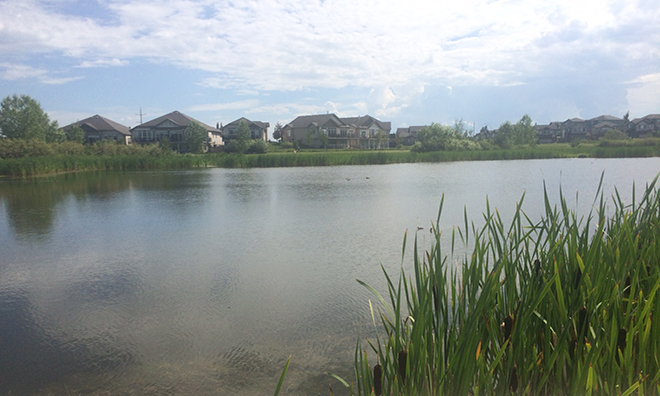
While they may look like community ponds, all these bodies of water in Sherwood Park are actually stormwater management facilities.
These facilities, and the natural vegetation surrounding them, play an important role in the County’s ecosystem and stormwater management system:
- Gather rainfall and surface water runoff
- Reduce risk of flooding, erosion and property damage
- Filter water, removing sediment and other materials
- Provide a habitat for birds and animals
- Help address climate change; as a natural carbon sink, they absorb carbon dioxide from the atmosphere
Sherwood Park stormwater management facilities map
How stormwater management works
When it rains, the water enters manholes and catch basins on the street and flows through the storm sewer. Water then collects in one of the stormwater management facilities. The water can also go directly to an outlet that empties into a natural drainage area.
The water is released gradually back into the natural drainage system, avoiding erosion and flooding downstream.
Strathcona County follows best management practices to help protect the watershed by managing the quality and quantity of stormwater flowing into receiving waters.
Best Management Practices for Stormwater Management (2.1 MB)
Our stormwater quality monitoring program provides rationale for management decisions, construction standards and provincial guidelines.

Types of stormwater management facilities
Constructed wetlands and wet ponds
- are man-made.
- are surrounded by natural vegetation such as cattails, shrubs and grasses. There may also be underwater vegetation, and algae may form on the water surface.
- collect runoff from streets, the ground surface and storm sewers. That runoff may contain residue from lawn fertilizers and chemicals, various organisms, animal wastes and similar substances.
Dry ponds
- are man-made.
- look like dish-shaped grassed fields and may be used as informal play areas.
- may temporarily fill with surface water runoff during heavy rainfall, but are generally dry.
Natural wetlands
- are natural (not man-made) and function as part of the stormwater management system.
- wetlands provide numerous benefits including wildlife habitat, biodiversity, flood mitigation and water purification.
Naturalization
Naturalization means helping land and habitat return to a natural state.
Don’t worry, we didn’t forget to mow here!
To promote naturalization the County is expanding the buffer zone around the facilities by not mowing the grass and allowing native vegetation to take over. Please be patient with us as we allow this area to naturalize. This may be a change from what some residents are used to. Strathcona County will continue to mow between the naturalized area and private properties.
Establishing and managing vegetation is essential to how a stormwater facility is designed and works. Naturalized stormwater facilities have shoreline buffers with cattails, shrubs, trees and grasses. This supports the water supply and ecosystem:
- Controls flooding by protecting banks from erosion and capturing rainwater
- Provides habitat for pollinators like bees and butterflies, birds and predators like dragonflies and frogs.
- Filters and cleans our water. Our drinking water comes from the North Saskatchewan River, and the water in stormwater facilities slowly drains to the river.
- Reduces the effects of drought. Vegetation helps hold water during snowmelt and rain, and slowly releases moisture to parched land during dry weather.
- Reduces algae growth by preventing excess nutrients (such as nitrogen and phosphorous) from being washed into the pond.
The Stormwater Quality Monitoring Program identifies water quality issues, including: poor shoreline vegetation; or an unnaturally high population of waterfowl. Naturalization activities are the solution to these issues.
Protecting the North Saskatchewan River
The water that enters our stormwater system does not go through an engineered treatment process before it releases to the North Saskatchewan River. You can take action to protect our stormwater system and ecosystem.
Sweep it! Don’t spray it!
Washing driveways and sidewalks wastes valuable drinking water and the runoff can impact water quality in our stormwater ponds. Dirt, litter and chemicals like oil get washed onto the road where the runoff travels to our stormwater facilities. A vehicle wash station collects those pollutants for proper disposal, rather than releasing them into our natural system.
Protect our stormwater system by joining the Blue Broom Crew.
Adopt a Storm Drain
Adopting a storm drain is a great way to protect your local stormwater ecosystem and keep your neighbourhood clean and free of debris.
Support naturalization
If your property backs onto a stormwater facility, you can support the process of naturalization by contacting Environmental Planning to learn more and discuss a site specific naturalization plan for your property.
Don’t let it loose!
Plants and animals that are not native to Alberta can become invasive if they are released into our waters. These species are known as aquatic invasive species and can harm our environment, economy and human health.
Wildlife
While our stormwater management facilities can provide great habitat for many different species of wildlife, some species can impact the functionality of these utilities. Beavers can pose concerns if they are blocking and preventing stormwater from flowing out to the natural drainage systems, this can cause potential flooding concerns around the facilities. For more information regarding beavers and beaver management, please visit out webpage.
Living by a stormwater facility
Living by a stormwater facility has many benefits but also comes with responsibility.
Living by a stormwater facility brochure (2.4 MB)
Make sure water is flowing and draining properly
Make sure the water on your property is flowing and draining properly. This can prevent problems for you and your neighbours.
When water isn’t draining properly, the ground may not be able to absorb water and this could result in erosion or sloughing, causing flooding.
Learn more about the surface drainage bylaw.
Weeping tile and downspouts
Do not direct your weeping tile and downspouts directly into the stormwater facility. This can cause significant problems over time. It could be the homeowners’ responsibility to pay for costs to repair the area.
Let water drain naturally. Stormwater facilities are designed and built to have larger amounts of water enter at certain points and flow rates.
Stormwater facilities and wetlands must not be drained, filled or altered without written approval from the Province of Alberta and Strathcona County. Please refer to the Wetland Policy for more details.
You can support the process of naturalization by contacting Environmental Planning to learn more and discuss a site specific naturalization plan for your property.
Spring odours
During the spring thaw, stormwater moving through the storm drains may have a rotten egg odour due to vegetation breakdown from the stormwater ponds. Plants in the storm water ponds die off, break down and rot. This breakdown is trapped under the ice covering the water body. Once spring thaw starts, the water with the vegetation runs down the storm mains and the odours come up through storm manhole lids and catch basins.
Once spring thaw is over, the odour should disappear.
Stormwater safety
Stormwater ponds collect all of the stormwater runoff from neighbourhood streets. This flowing water can take all types of contaminants along with it, making the water quality conditions unknown. In addition, the silty bottom of these facilities can be dangerous and people and pets can get stuck.
For health and safety reasons, Strathcona County Parks bylaw states that no person shall wade or swim in any storm water management facility. Further, any recreational activity near the water or contact with the water is not recommended.
Unacceptable recreational activities are located within the Parks Bylaw 21-2013 (section 13,14).
In winter, moving water and fluctuating weather conditions lead to unknown, unpredictable and dangerous ice conditions. Obey all posted signs—these include “thin ice”, “no skating” and “keep off”. Choose one of the many safe outdoor skating options including boarded rinks, snowbank rinks, and our new skating tracks.
Violators may be charged for swimming or wading with the stormwater facility. Residents are urged to keep away. These man-made structures are not built for recreational use and even if they look shallow, can be dangerous.
Utilities
Phone: 780-467-7785
Email: scutilities@strathcona.ca